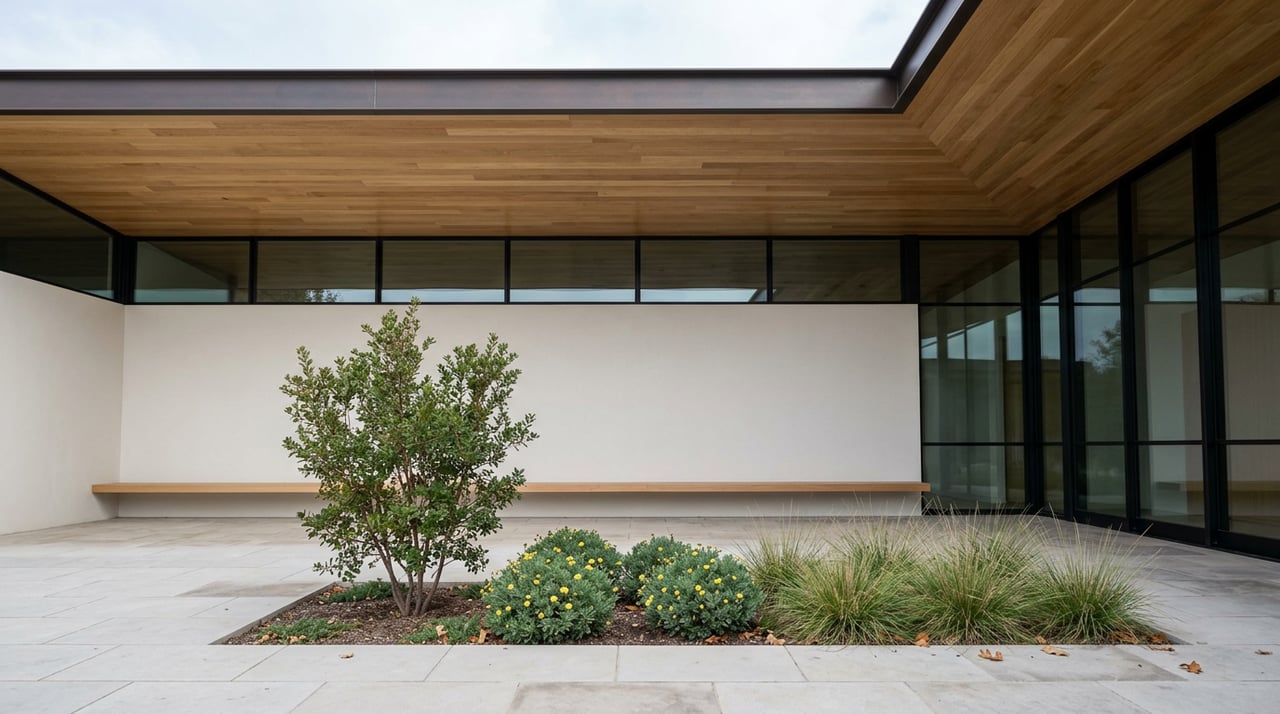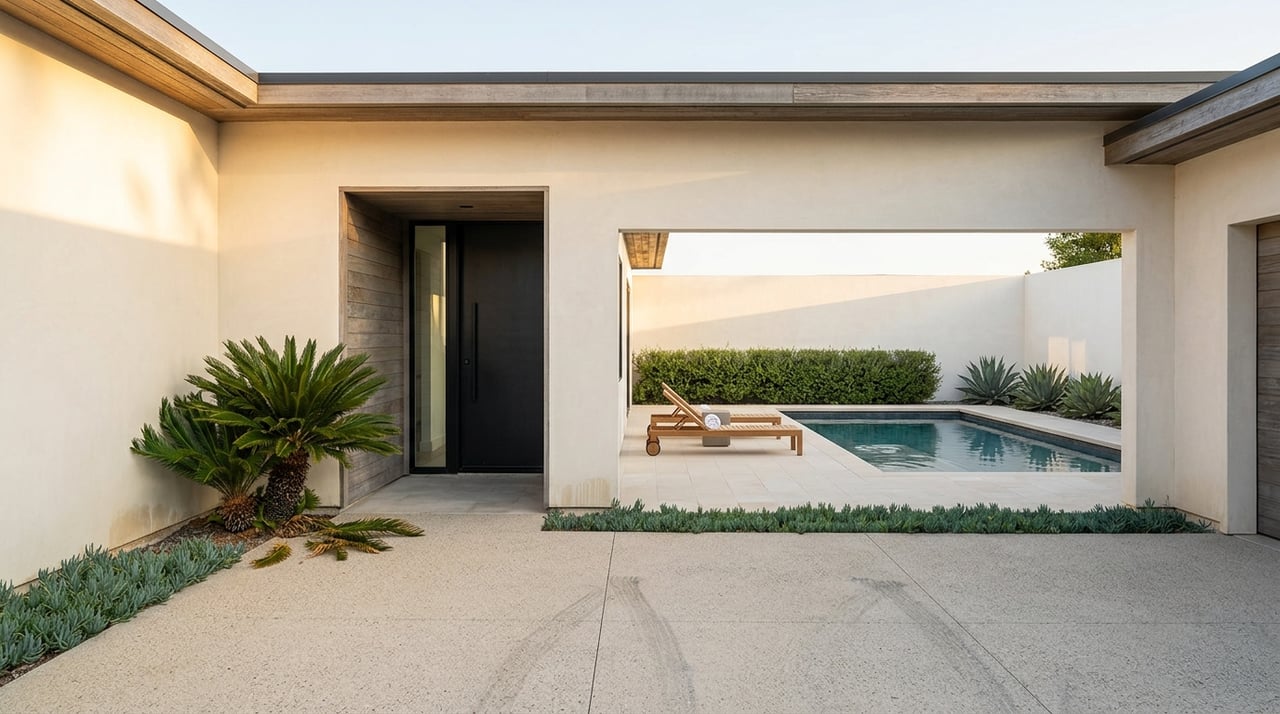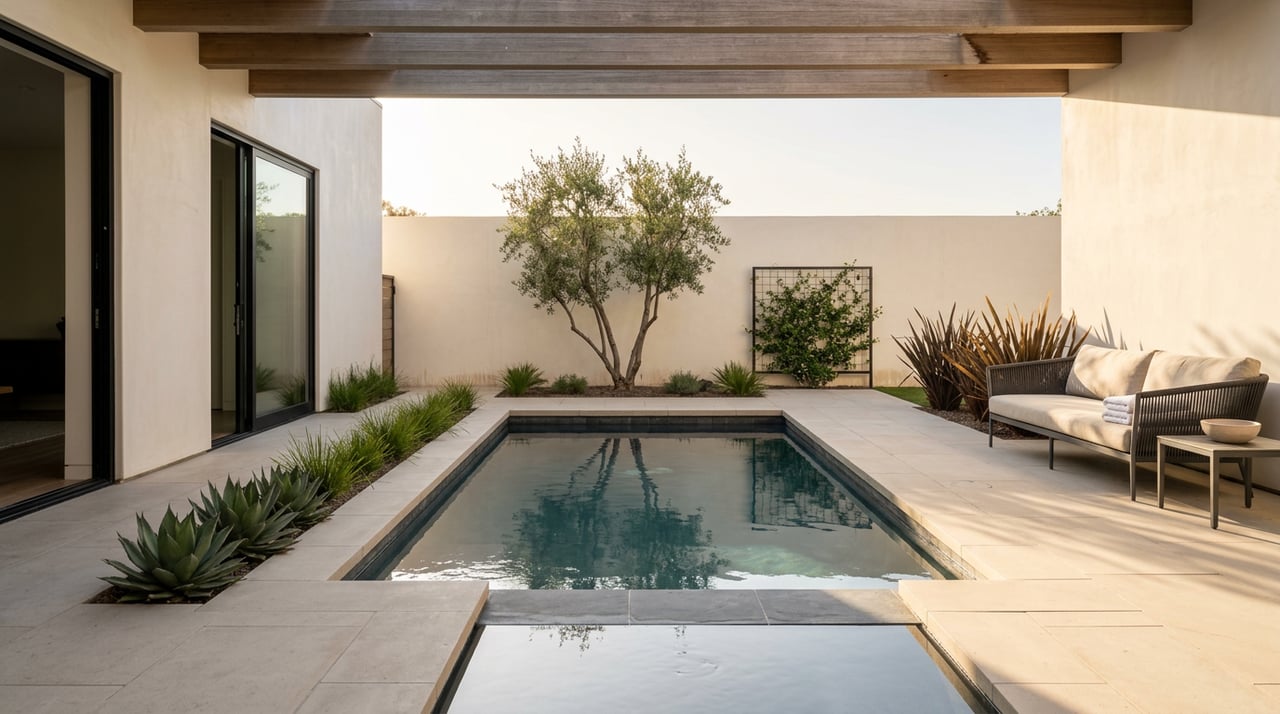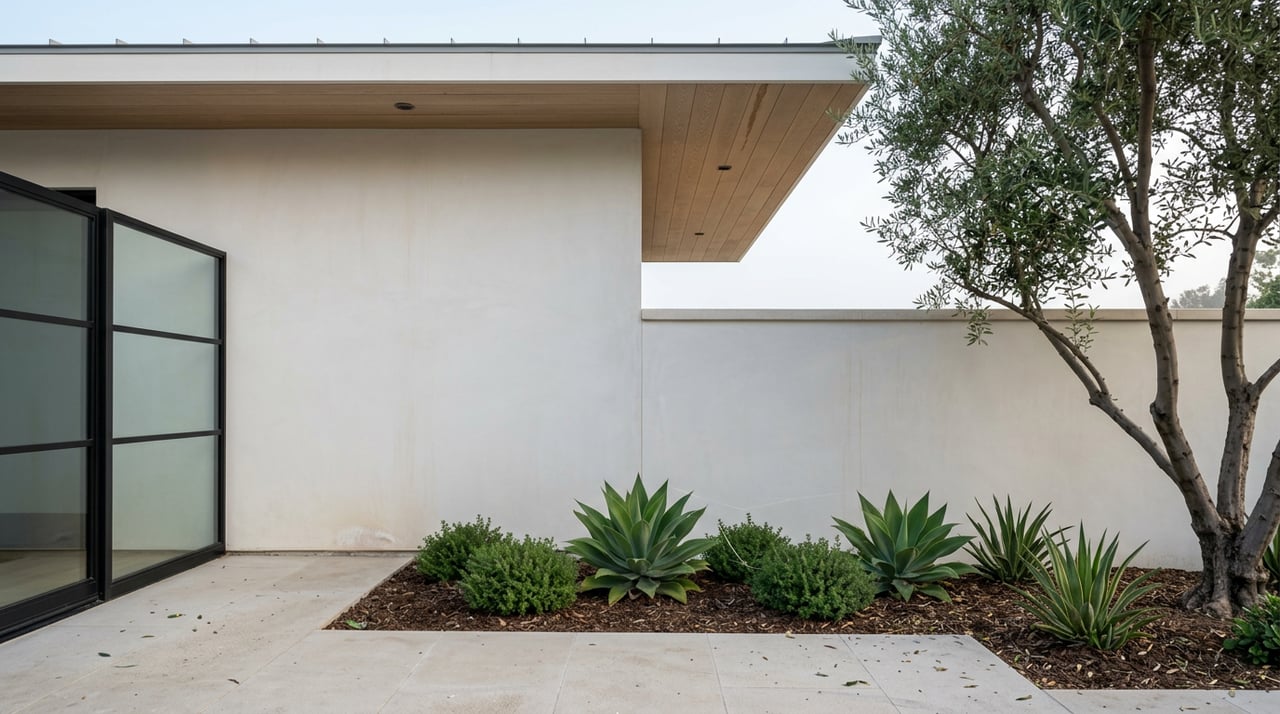
The house at 1041 Marine Drive has one bathroom, no bedroom, and 432 square feet of interior space. It was built in 1923, and a wooden staircase runs from its backyard down to Shaw's Cove, one of the more swimmable pockets of Laguna Beach's coastline. The backyard itself takes up most of the 8,500-square-foot lot. The house is almost an afterthought sitting on top of it.
In April 2026, that cottage listed for $18.8 million. Do the division and you get roughly $43,519 per square foot, a number that made national headlines and got treated everywhere outside Orange County as a punchline. Locally, it wasn't a joke. It was a fairly clean demonstration of something anyone shopping for a home in Laguna Beach needs to understand before they trust a listing sheet: price-per-square-foot, the metric almost everyone uses to sanity-check a comp, does not work the way it works almost everywhere else. Knowing why matters more than knowing the number, whether you're comparing this city to Dana Point or comparing two houses three streets apart inside the same zip code.
A Street Where the Math Stops Working
Next door, 1031 Marine Drive holds roughly 4,700 square feet of house and carries a value near $16.4 million. Work that out and it lands around $3,489 per square foot, close to a twelfth of what the tiny cottage is asking for. Same street. Same stretch of water. A twelvefold gap in the one number both properties are supposedly priced on.
The gap shows up again if you leave the street entirely. That same season, 2665 Victoria Drive, a five-bedroom, six-bath house with 5,342 square feet, was on the market for just over $18 million, in the same price range as the cottage. That works out to roughly $3,370 per square foot, in line with the neighbor on Marine Drive and nothing like the cottage's number. Two Laguna Beach properties, priced within a few hundred thousand dollars of each other, and one of them buys twelve times the living space.
The cottage itself last changed hands in 2020 for $7.35 million. Six years later, with no bedroom added and the same one bathroom, the asking price had more than doubled. The property's tax assessment sits near $7.96 million, which puts the annual property tax bill around $81,864. None of that increase traces back to the structure. It traces back to the lot: a rare, flat run of coastal bluff with private stairs to a swimmable cove, on a street where a parcel like that almost never comes up for sale.
"So, $18.8 million is what you're paying for the land, you get the cottage with it," one real estate professional told CBS News Los Angeles.
What the City Is Actually Selling You
Once you see it in the cottage, it's easier to see everywhere else. An appraisal built on bed count, bath count, and interior square footage assumes the structure is doing most of the pricing work. In most housing markets, that's a fair assumption. In Laguna Beach, where the coastline is fixed, the bluff line is fixed, and new construction can't meaningfully expand either one, the lot is frequently doing most of the pricing work instead.
That reframes what counts as a real comparable. Two three-bedroom houses with similar square footage are not comparable if one sits on a flat, buildable lot inside the bluff line with an unobstructed whitewater view and the other sits a block inland with a partial side view from an upper deck. The difference between those two lots can run into the millions, on paper-identical homes. A buyer or seller who anchors a number purely to square footage is negotiating from a spreadsheet that doesn't match the market.
The Same Premium Doesn't Live Everywhere
That premium also isn't spread evenly across the city. It concentrates hard in a handful of areas and thins out fast once you move away from them.
| Area | What recent data shows | What's actually being priced |
|---|---|---|
| Emerald Bay | As of spring 2026, the trailing 12-month median sale price was near $8.25 million, up 8% year over year, against a January 2026 median list price near $12 million. Homes here average close to 99 days on market. | Guard-gated privacy, a half-mile private beach, and a private tunnel under Pacific Coast Highway linking hillside homes to the shore. The wide gap between list and eventual sale reflects a buyer pool narrow enough that sellers often wait for the right match rather than the first offer. |
| Top of the World | February 2026 median sale price of $3.5 million, with price-per-square-foot up 38.5% year over year, on just 5 closed sales that month, up from 3 the year before. | Canyon and ocean views without beachfront access. A market this thin can swing double digits in a single month on the strength of one unusually large or small sale, which is worth remembering before treating any single month's figure as a trend. |
| Laguna Village | Cottages and condos most often priced in the $2 million to $3 million range. | Walkability to Main Beach, galleries, and downtown restaurants rather than a private view corridor. This is the closest thing the city has to an entry point. |
| Canyon and hillside streets (Temple Hills, Bluebird Canyon, Arch Beach Heights, Laguna Canyon) | Lower price-per-square-foot on paper compared to bluff-line inventory. | More than half of Laguna Beach's residential lots sit on slopes exceeding 15%, so building or adding square footage here can mean a geotechnical investigation running $5,000 to $12,000, retaining walls at $200 to $500 per linear foot, and caisson foundations at $3,000 to $8,000 each before a permit clears. |
That last row matters for anyone tempted to read a lower per-square-foot number as simply cheaper. A hillside lot in Bluebird Canyon might list well below the coastal median, but a buyer planning any structural addition should budget for the slope engineering that a flat lot in Laguna Village never requires. The city's Design Review Board clears straightforward permit applications in four to eight weeks, but a bluff-top addition or a project touching sensitive habitat can add four to six more months of California Coastal Commission review on top of that.
This Week's Median Is a Trick Too
The same distortion that shows up in a single listing shows up in the weekly market snapshot, and the timing is current enough to make the point directly. As of early September 2026, active inventory in Laguna Beach had pulled back from 167 listings to 157 in the span of a single week, roughly a 6% drop. Homes that sold in the trailing 14 days averaged 30 days on market, down sharply from 70 days the week before. Read those two figures together and it looks like a market accelerating hard toward sellers.
But the median sold price in that same 14-day window slid too, from around $4.1 million down to about $3.375 million, and that number came from only 17 closed sales. That's not seventeen homes losing value. It's seventeen closings, and the batch that closed in the second week happened to sit lower on the price ladder than the batch before it.
The same pattern shows up over a longer stretch. Across the three months ending in May 2026, Laguna Beach's median sale price climbed 5.0% year over year, while the median price per square foot fell 15.4% over that same window. Price and price-per-square-foot did not move in the same direction, and in this market they don't have to, because a meaningful share of what closes in any given month is either raw land value or an unusually large parcel that skews the average on its own. Treating either figure as a stable month-to-month index is a fast way to misread a market that doesn't behave like most others.
What This Means If You're Comparing Laguna to Dana Point or San Clemente
Laguna Beach does carry a real premium over Dana Point and San Clemente, and sits closer in line with Newport Beach. But that premium isn't a flat tax applied evenly across every address inside the city limits. It concentrates in the bluff-line inventory, the Emerald Bays and Three Arch Bays and the handful of streets like Marine Drive where the lot is the actual product. Step three streets inland into Laguna Village or the canyon neighborhoods, and the gap narrows considerably, even though you're still inside the same school district boundary and the same seven miles of coastline.
Before writing an offer or setting an asking price here, it's worth checking whether the comparison actually holds up. A real comp needs to match:
- Bluff position and distance from the water, not just proximity on a map
- View angle and consistency, since a direct whitewater view and a partial side view from an upper deck price very differently even from the same street
- Whether the lot preserves room for future rebuilding, since a flat, buildable parcel behaves like a different asset than a steep one requiring retaining walls and caisson work
Does a low price-per-square-foot always mean a better deal in Laguna Beach? Not on its own. A canyon lot priced well below the coastal median can still carry real slope-engineering costs if you plan to add square footage, costs a flat lot in Laguna Village never faces.
Why did the median sale price look like it dropped this month? In a small, high-value market like this one, a handful of closings can swing the median without any individual home losing value. Check which neighborhood and price tier actually closed before reading a one-week or one-month figure as a trend.
Is Emerald Bay's list price a reliable guide to what a home will actually sell for? Not by itself. The gap between list and eventual sale price in Emerald Bay has run wide through 2026, and homes there average close to 100 days on market, longer than the citywide figure, because the buyer pool for a guard-gated, private-beach property is narrower than the market as a whole.
Numbers like these are exactly why a listing sheet only tells part of the story in a market this granular. If you're weighing a Laguna Beach property against something in Dana Point, San Clemente, or a canyon lot three streets from the coast, Erich Redder and the ER² For You team can walk through what a given lot, view, and price actually represent before you write an offer. Schedule a consultation and get the read that the median can't give you.